
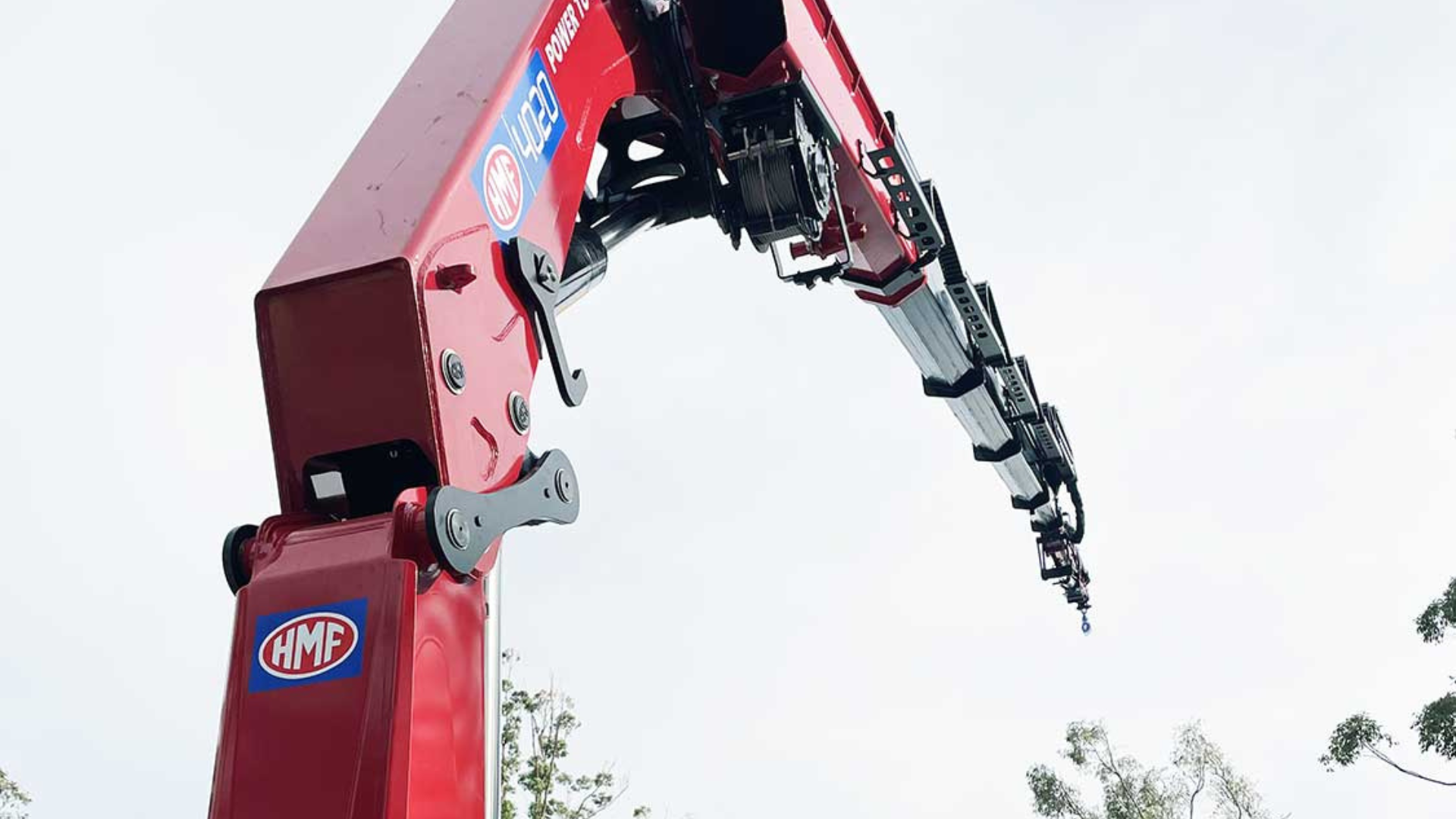
If you operate vehicle loading cranes in Australia, you already know servicing isn’t optional. But the specifics of what’s required, how often, and by whom can be harder to pin down than they should be.
The regulatory framework spans a few key Australian Standards, particularly AS 2550.11 and AS 1418.11, and sets out a tiered inspection schedule that every crane owner and operator must follow. Inspections must be carried out by a competent person with direct experience with vehicle loading cranes, and records must be maintained for the life of the equipment. Fall short on any of those, and you’re looking at potential fines, liability issues, and unplanned downtime.
Below, we’ve broken down the standards that apply to VLC servicing in Australia, what the inspection schedule actually looks like, who qualifies to do the work, and where operators most commonly get it wrong.
The Australian Regulatory Framework for Crane Servicing
Crane servicing obligations in Australia sit within a layered system of national and state legislation. The model Work Health and Safety Act 2011 provides the national framework, and most states and territories have adopted harmonised WHS laws based on that model.
The two notable exceptions are Victoria, which continues to operate under its own Occupational Health and Safety Act 2004, and Western Australia, which moved to a harmonised WHS framework on 31 March 2022 but, like all jurisdictions, retains some local variations in how the laws are applied.
SafeWork Australia is the national policy body responsible for developing model WHS laws and guidance materials. It is important to understand that SafeWork Australia is not an enforcement body. Enforcement falls to state and territory regulators such as SafeWork NSW, Workplace Health and Safety Queensland, WorkSafe Victoria, and WorkSafe WA.
Sitting alongside the legislation are Australian Standards, which serve as important technical benchmarks that regulators and courts may use when assessing whether a business has met its duty of care. Following the relevant Australian Standards is strong evidence that you have taken reasonably practicable steps to manage risk. Still, compliance is ultimately judged on the overall safety outcome and whether your control measures were appropriate in the circumstances.
This is exactly why your choice of service provider matters. While the person with management or control of a crane has a legal duty of care to ensure its safe condition under WHS legislation, working with a qualified, manufacturer-approved service partner is one of the most effective ways to meet that obligation with confidence.
Australian Standards for Crane Inspection and Servicing
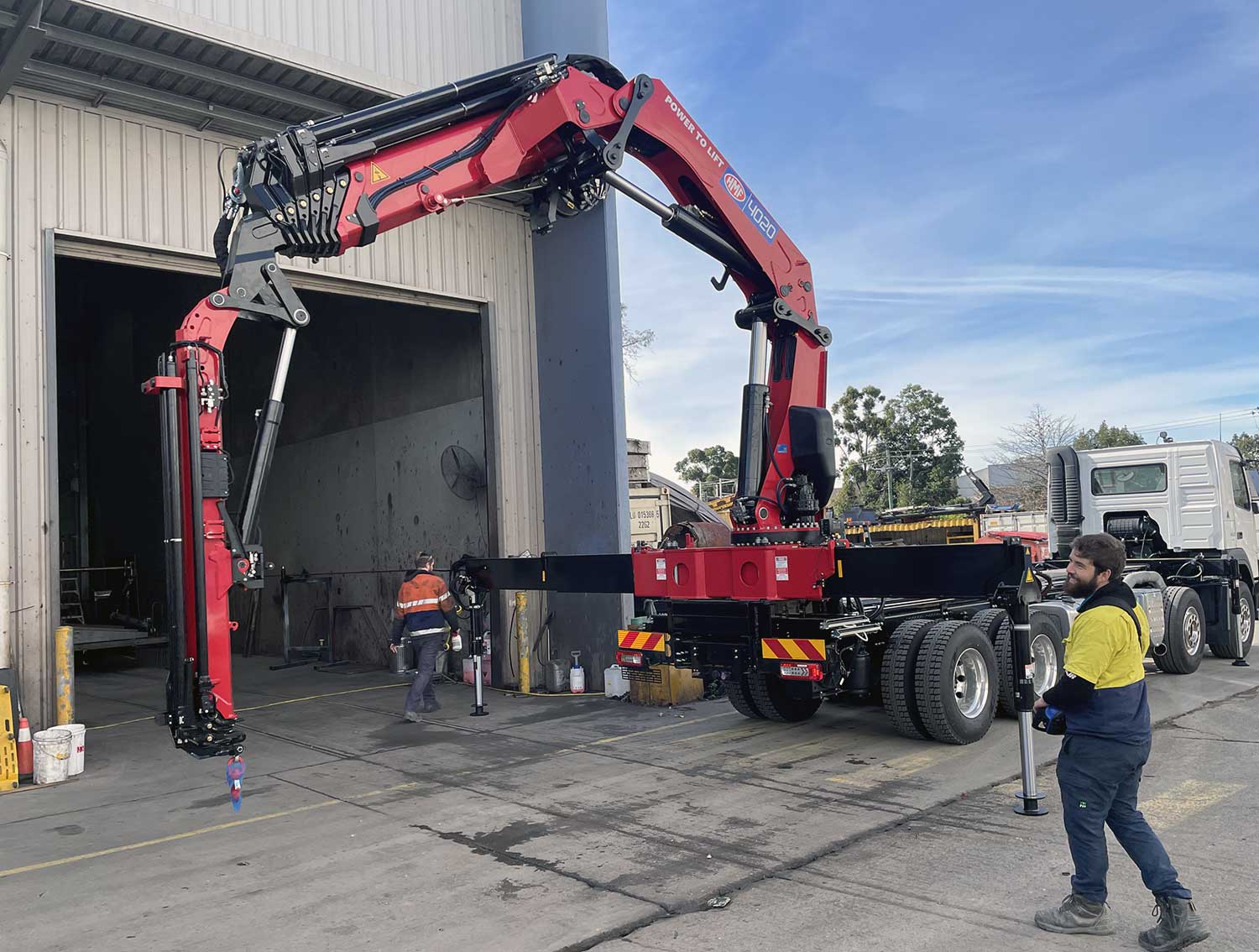
Several Australian Standards apply directly to the servicing of vehicle loading cranes. Knowing which ones matter and what they cover is the first step toward staying compliant.
AS 2550: Safe Use of Cranes, Hoists and Winches
AS 2550 is the primary standard governing safe crane operation, inspection, and maintenance across Australia. It is broken into multiple parts, with AS 2550.1 covering general requirements that apply to all crane types. The part most directly relevant to vehicle loading cranes is AS 2550.11, which sets out specific provisions for vehicle loading cranes (also referred to as loader cranes or truck-mounted loader cranes).
AS 2550.11 was updated in 2016, and that edition introduced several important changes. It now includes specific requirements for the major inspection of vehicle loading cranes, where previously operators had to rely on the general provisions in AS 2550.1. The updated standard also mandates that data recording devices be fitted, maintained, and operated in accordance with ISO 10245-1 and the manufacturer’s instructions.
The standard sets out requirements for periodic inspections, maintenance scheduling, record-keeping, and the competency of personnel who conduct inspections. It is the single most important reference document for anyone managing a vehicle loading crane fleet in Australia.
AS 1418: Design and Construction of Cranes
AS 1418 governs how cranes must be designed and manufactured. For vehicle loading cranes, AS 1418.11 is the relevant part. While this standard is primarily aimed at manufacturers and designers, it has direct relevance to servicing because a major inspection under AS 2550.11 now requires comparing the crane’s design against the current edition of AS 1418.11.
If practical upgrades can bring the crane closer to the current design standard, the expectation is that those upgrades should be carried out.
AS 4991: Lifting Devices
AS 4991 covers lifting accessories and rigging equipment used in conjunction with cranes. While it does not directly govern the crane itself, it is relevant when servicing or replacing lifting attachments and accessories.
How Australian Standards Support Compliance
When an operator follows the relevant Australian Standards, it is strong evidence that they have taken reasonably practicable steps to meet their duty of care under WHS legislation. While this does not automatically guarantee compliance, it can provide significant support if your safety systems are ever scrutinised. Conversely, if you choose not to follow the standards, you may need to demonstrate that your alternative approach delivers an equivalent or higher level of safety.
How Often Does a Crane Need to Be Inspected and Serviced?
Crane inspection in Australia operates on a tiered schedule, with inspections at different levels occurring at different intervals.
Pre-Operational Checks
A pre-start inspection should be carried out before every use. This is the operator’s responsibility and should cover hydraulic fluid levels, stabiliser condition, load chart visibility, hook and latch condition, control functionality, and a visual check of the crane’s overall condition.
Operator checklists and logbook records should be completed in line with the manufacturer’s recommendations and the business’s maintenance procedures. An informal verbal walk-around alone may not be enough to demonstrate that these checks were properly completed.
Periodic Inspections
AS 2550 calls for periodic inspections carried out by a competent person at intervals determined by usage intensity. Under AS 2550.1, routine maintenance servicing should not exceed three-monthly intervals.
Many operators also schedule more comprehensive inspections annually, and vehicle loading cranes should be formally inspected and maintained by a competent person in accordance with the manufacturer’s instructions and the relevant Australian Standards, with annual inspection forming a key part of that servicing regime.
A competent person in the crane servicing context is someone with the specific training, knowledge, skills, and experience to identify hazards and assess the safe operation of vehicle loading cranes. This is not simply a general mechanic or all-purpose fitter. It is someone with demonstrated crane-specific competence, and that distinction matters significantly for compliance.
Major Inspections
Major inspections are the most comprehensive level of assessment. Their timing depends on the manufacturer’s design life, the manufacturer’s recommendations, and the assessment of a competent person. Where those intervals are not clearly available, or it is not reasonably practicable to apply them, the WHS framework sets a backstop requiring a major inspection to occur at least every 10 years from first commissioning. Any future inspection interval should then be determined based on the crane’s condition, usage profile, and competent person assessment.
A major inspection is a significant undertaking. It may involve partial or substantial disassembly to assess fatigue, cracking, corrosion, and wear that would not be visible during routine servicing. Non-destructive testing methods such as magnetic particle or ultrasonic testing may also be used where appropriate. Depending on the crane’s age and condition, the cost can be substantial, which is one reason some fleet operators assess whether replacement is more commercially viable than retaining older equipment.
Maintenance Records
Keeping detailed records of inspections, servicing, repairs, alterations, and other relevant maintenance activity is a legal obligation under WHS regulations, not just a best practice. These records must be retained for the period the crane is in use and should be available upon request by a regulator or upon transfer of control of the plant.
Many operators do not realise that record-keeping is a compliance obligation in its own right, and that missing records can create serious compliance issues even if the crane itself appears to be in good condition.
Who Is Qualified to Service a Crane in Australia?
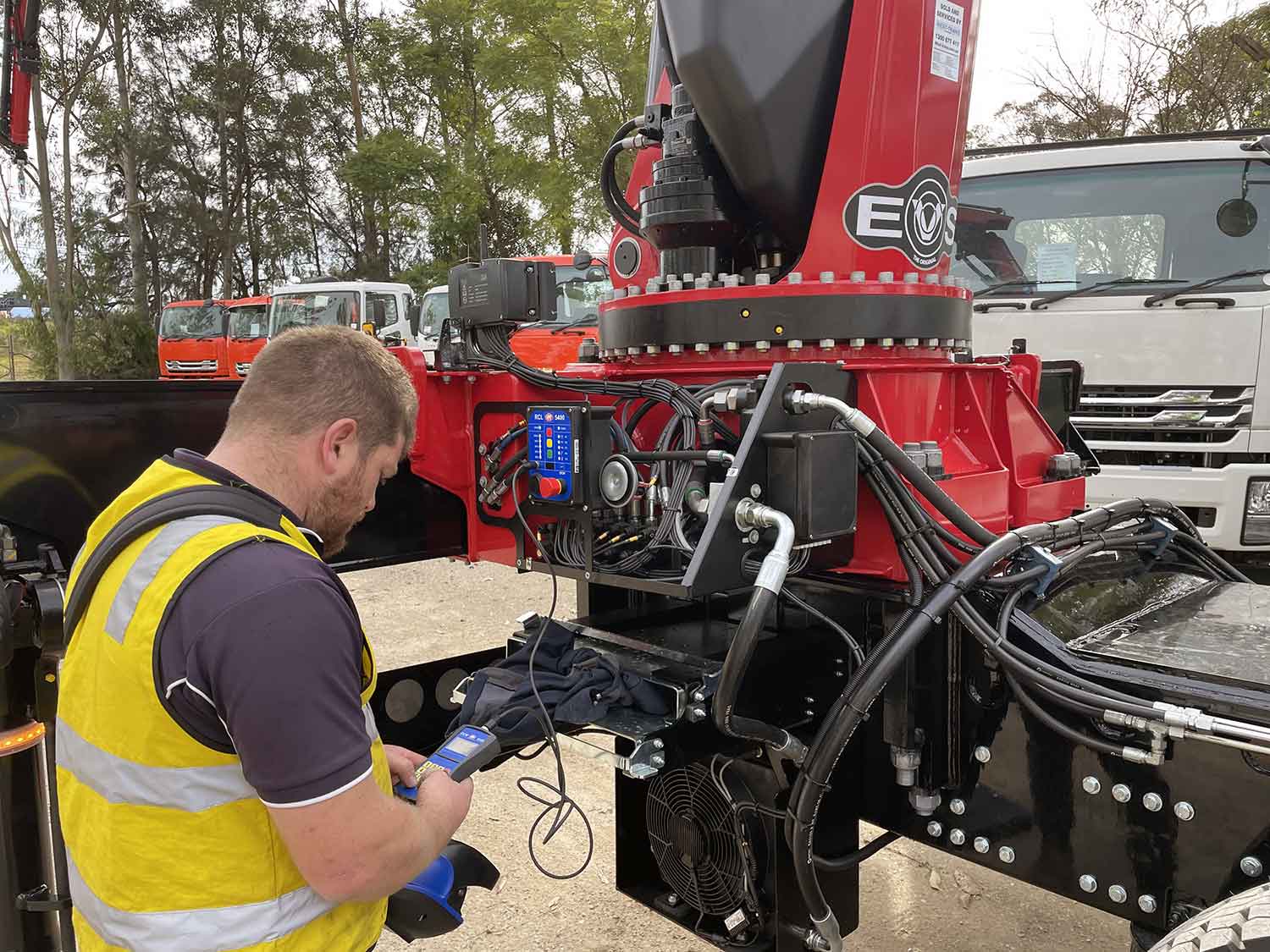
This is one of the areas where many operators get caught out. There is no single universal licence for crane service technicians in Australia, unlike crane operators, who require a High Risk Work Licence for certain crane types. However, WHS legislation and AS 2550 both require that servicing and inspection be carried out by a competent person with the relevant knowledge, training, skills, and experience specific to that type of crane.
A common assumption is that any qualified tradesperson can service a crane, but crane servicing requires specific competency. A general mechanic may be skilled with hydraulic systems in a broad sense but lack the crane-specific training needed to identify structural fatigue patterns, correctly interpret load chart data after a repair, or assess whether safety systems like the rated capacity limiter (RCL) are functioning within specification.
Using a manufacturer-approved technician is often one of the most effective ways to meet this requirement. Approved technicians typically have access to OEM parts, factory training, and the correct technical specifications for each crane model. Only authorised HMF service agents will have the programming tool necessary to correctly carry out a service. While the legal requirement is competence rather than manufacturer approval itself, using a non-specialist service provider can create real risks, including missed defects, incorrect parts, gaps in documentation, and potential warranty issues.
HMF Australia maintains a national network of approved service partners specifically trained on HMF vehicle loading cranes. These technicians understand both the technical requirements and the compliance documentation needed to keep your records audit-ready.
Does Crane Compliance Vary by State and Territory?
The short answer is that core obligations are consistent across most of Australia thanks to the harmonised WHS framework, but enforcement bodies and some specific provisions do differ.
Victoria operates under its own OHS legislation rather than the model WHS Act, and while its practical requirements are similar, the specific definitions and enforcement powers are not identical. Western Australia harmonised in 2022 and is now largely aligned with other jurisdictions, but operators should still confirm local requirements with WorkSafe WA.
The safest approach for multi-state operators is to work with a service provider that operates nationally and understands the compliance requirements in each jurisdiction.
Common Compliance Mistakes Operators Make
Even well-intentioned operators fall into compliance traps. Some of the most common include relying on the purchase date rather than a formal commissioning date to determine when inspections are due. Others skip documented pre-start inspections in favour of an informal visual check, or have servicing performed by a general mechanic who lacks expertise in vehicle loading cranes.
Operators who buy second-hand cranes without obtaining the full service history inherit an immediate compliance gap. Without verified records, the new owner has no way to demonstrate the crane’s maintenance history to a regulator. In the worst case, this can trigger an early major inspection, which is a significant unplanned expense.
Another common mistake is assuming the manufacturer’s warranty period defines the inspection schedule, which it does not. Warranty and compliance are separate obligations, and the end of a warranty period has no bearing on when inspections are due under Australian Standards.
Delaying repairs that are identified during an inspection is also a risk that many operators underestimate. A finding of “still serviceable” during an inspection is not a defence if a safety incident occurs before the repair is completed.
How HMF Australia Supports Crane Compliance
HMF cranes are engineered and manufactured to meet and exceed Australian Standards, including AS 1418.11 and EN 12999. HMF’s patented Electronic Vehicle Stability (EVS) technology, available as an upgrade on applicable models, provides an additional layer of safety by monitoring and limiting crane movement when the truck is operating at angles that could compromise stability.
Beyond the equipment itself, HMF Australia supports operators with access to genuine parts, helping reduce delays associated with overseas supply chains and lowering compatibility risks that can come with aftermarket components. The approved service network understands compliance documentation requirements and can help ensure your records meet regulatory expectations.
For operators looking to audit their current servicing arrangements or find an approved service partner, contact HMF Australia to speak with a specialist.
Keeping Your Crane Compliant Long Term
Crane servicing compliance in Australia does not need to be complicated, but it does need to be deliberate. Audit your current servicing schedule against the tiered inspection requirements in AS 2550 and confirm that your service provider meets the competent person standard for vehicle loading cranes specifically. You also need to ensure your documentation is complete, accessible, and covers the full life cycle of each crane in your fleet.
The operators who stay ahead of compliance are the ones who treat it as an ongoing part of fleet management rather than something to address when an inspector turns up. If you are unsure where you stand or need help reviewing your compliance position, get in touch with HMF Australia.