
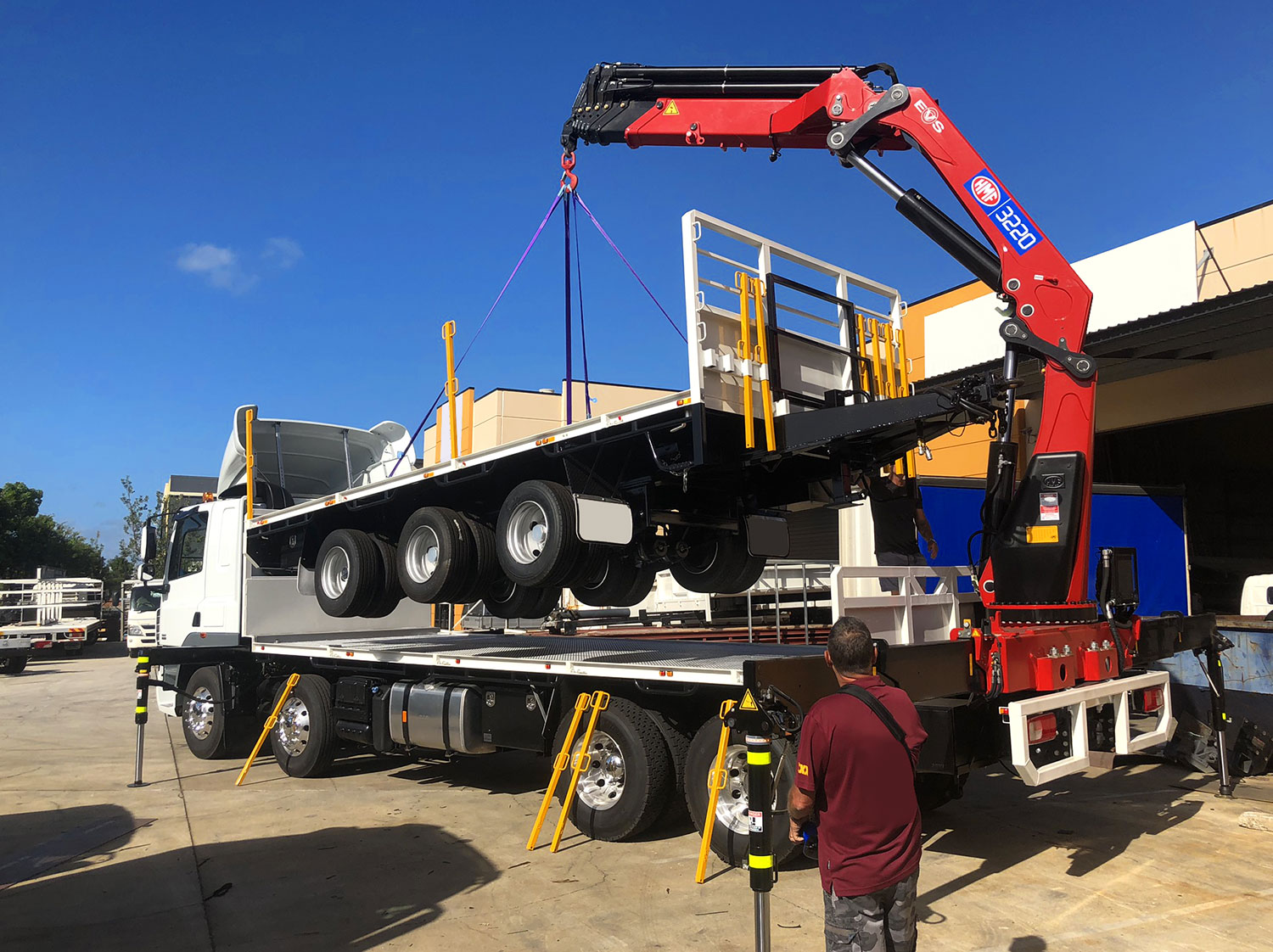
When your vehicle loading crane hits the 10-year mark, you’re facing more than just another compliance check. The 10-year inspection goes far deeper than your annual safety checks.
Inspectors use specialised testing to examine structural integrity that can’t be seen during normal operation, verify system response, and assess whether a decade of work has taken its toll on critical components.
Understanding what’s involved, how long your crane will be unavailable, and what you might realistically spend makes the difference between a planned business decision and an unplanned expense.
What Makes the 10-Year Inspection Different?
The 10-year major inspection is a comprehensive structural and functional assessment mandated under AS 1418.11 (Cranes, Hoists and Winches – Vehicle-loading Cranes) and AS 2550.11 (Safe Use of Vehicle-loading Cranes). While annual inspections focus on operational safety and visible wear, the major inspection goes deeper with non-destructive testing, proof-load testing, and detailed structural analysis, which can only be performed with specialised equipment and certification.
After the initial 10-year major inspection, further inspections are required at intervals of no more than five years, in accordance with AS 2550.11.
The Complete Inspection Process
Your 10-year major inspection involves five distinct stages, each examining different aspects of your crane’s structural integrity and operational safety:
| Inspection Stage | What’s Examined | Key Focus Areas |
| Pre-Inspection Preparation | Service history, maintenance records, crane condition | Crane must be clean and accessible; comprehensive testing requires workshop facilities |
| Visual and Structural Assessment | Boom, jib, mounting frame, subframe, welds | Cracks, deformation, corrosion (especially from salt air, dust, UV exposure in Australian conditions) |
| Non-Destructive Testing (NDT) | Critical load-bearing areas, structural joints | Advanced testing methods to detect surface and internal structural issues not visible during operation |
| Hydraulic System Inspection | Cylinders, hoses, fittings, pump, valves | Wear, seal degradation, leaks, pressure testing, and breather filter contamination |
| Load Testing & Capacity Verification | Rated capacity at various boom positions | RCL computer systems, pressure relief valves, stability systems, moment limiters |
Preparing Your Crane for Inspection
Getting your crane ready for its 10-year inspection involves more than just booking a date. You will need to gather all your documentation, including complete service records, previous inspection reports, and any documentation of repairs or modifications.
If you’re missing service history, that doesn’t disqualify your crane, but it does mean inspectors will need to be more thorough in certain areas.
You will need to clean the crane properly before it arrives at the workshop, as inspectors need to see bare metal to spot hairline cracks, corrosion, or other issues. Be sure to pay particular attention to the boom sections, hydraulic cylinders, and the area around pivot points, where grime tends to build up.
It is worth considering a pre-inspection maintenance check to address obvious issues, such as leaking hydraulic hoses or damaged protective boots, before the formal inspection begins.
Understanding Non-Destructive Testing
Non-destructive testing is where the 10-year inspection differs most dramatically from annual checks. For crane owners without technical backgrounds, think of NDT as similar to medical imaging. It lets inspectors see problems that aren’t visible to the naked eye but could lead to serious failure. Certified inspectors use specialised testing equipment to examine critical load-bearing areas and structural joints where stress concentrates during normal operation.
Testing Safety Systems
Modern HMF cranes have RCL (Rated Capacity Limiter) computer systems that prevent overloading by actively restricting crane movement beyond safe parameters. These systems are thoroughly tested during load verification to ensure they’re functioning correctly.
Hydraulic breather filters, which are changed during regular servicing, are also assessed for contamination patterns that might indicate broader system issues requiring attention.
The Cost Reality and Replacement Decision
The 10-year inspection provides a comprehensive picture of your crane’s condition. Inspection costs vary based on crane size, how it’s been used, and the results of testing. If significant remedial work is needed, such as structural repairs, hydraulic rebuilds, or safety system upgrades, you could be looking at costs that reach half the price of a new crane, depending on the condition.
This is why the 10-year mark becomes a genuine decision point. You’re not just ticking a compliance box; you’re evaluating whether it makes sense to invest in your existing crane or whether the numbers point toward replacement.
Modern cranes come with RCL computers that actually prevent overloading (not just warn about it), load-sensing pumps that reduce wear on your truck, and (on larger models) Electronic Vehicle Stability systems.
When you’re facing significant inspection and repair costs, these improvements matter to your calculation.
Common Issues and Timeline Expectations
Australia’s operating conditions are tough on vehicle loading cranes. Cranes working in coastal areas typically show accelerated corrosion from salt air, while those in mining environments deal with dust that penetrates seals and accelerates wear on moving parts.
The hydraulic system reflects this cumulative wear through degraded seals, cracked hoses, and scoring on cylinder walls. However, these issues aren’t failures, they’re the natural result of a decade of hard work under demanding conditions.
Planning for Downtime
Your crane will be out of service anywhere from several days to over a week. The exact timeline depends on what inspectors find and how much work is needed. A crane in good condition, with straightforward testing requirements, moves through faster than one requiring extensive NDT or remedial repairs.
The availability of parts can also extend the timeline if components need to be replaced. This is why advanced planning is essential, and you should schedule the inspection during quieter periods if possible.
Post-Inspection Certification and Preparation
Upon successful completion, you’ll receive certification documenting your crane’s compliance with AS 1418.11 and AS 2550.11. This documentation is essential for your records, insurance requirements, and demonstrating workplace safety compliance. The certification specifies your next inspection due date (five years from your 10-year inspection), and establishes your crane’s verified capacity for the next operational cycle.
Why Choose HMF Australia
HMF Australia provides certified expertise for 10-year major inspections through comprehensive testing facilities and the right equipment across our service network in New South Wales, Queensland, Victoria, Tasmania, and Western Australia.
Our transparent process starts with honest assessments of your crane’s condition. If we discover issues during inspection, we’ll explain what needs to be addressed and provide realistic cost estimates for remedial work. We also offer honest guidance on the repair-versus-replacement decision because we understand the economic challenges fleet managers face.
Sometimes the right answer is investing in repairs to extend service life. Other times, the numbers clearly favour replacing the equipment with modern units that offer better safety systems, improved efficiency, and lower operating costs.
Contact HMF Australia to schedule your 10-year major inspection or discuss your crane’s upcoming compliance requirements. Our team can answer questions about the process, provide timeline estimates, and help you plan for this critical milestone in your crane’s operational life.
Frequently Asked Questions
What standards apply to vehicle loading crane inspections in Australia?
Vehicle loading cranes must comply with AS 1418.11 (Cranes, Hoists and Winches – Vehicle-loading Cranes) and AS 2550.11 (Safe Use of Vehicle-loading Cranes). These Australian Standards establish the requirements for the design, construction, and safe use of loader cranes, including mandatory inspection intervals and testing procedures.
How often do vehicle loading cranes need major inspections?
Your crane’s first major inspection is due at 10 years from manufacture or commissioning. After that, major inspections are required at intervals not exceeding five years throughout the crane’s operational life. Annual inspections continue between major inspection cycles.
What’s the difference between annual inspections and the 10-year major inspection?
Annual inspections focus on operational safety, visible wear, and functional testing of safety systems. The 10-year major inspection includes non-destructive testing of structural components, comprehensive proof load testing, detailed hydraulic system analysis, and certification by specially qualified inspectors. It’s significantly more thorough and time-intensive.
How much does a 10-year major inspection typically cost?
Inspection costs vary based on crane size, complexity, and condition, but can reach up to 50% of a new crane’s purchase price when remedial work is required. Base inspection costs are more modest, but if testing reveals structural issues, hydraulic system rebuilds, or safety system upgrades are needed, total costs increase substantially. This cost reality is why many companies replace cranes rather than continuing operation past the 10-year mark.
What happens if my crane fails the 10-year inspection?
If your crane fails inspection, you’ll receive a detailed report of deficiencies that must be addressed before certification can be issued. Depending on severity, issues may require structural repairs, component replacement, or hydraulic system work. You cannot legally operate the crane for commercial purposes until it passes inspection and receives proper certification. The inspector will outline required remedial work and estimated costs so you can decide whether to proceed with repairs or consider replacement.