
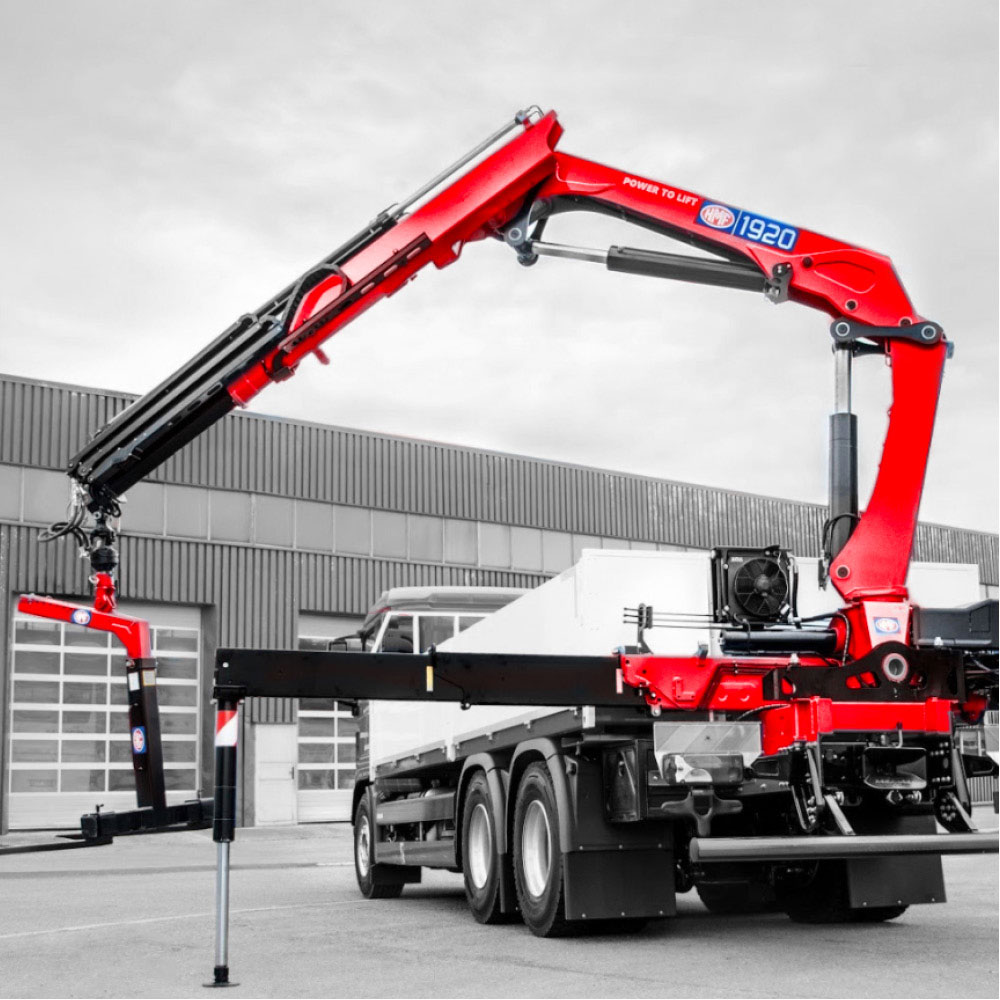
Loader crane outriggers, often called stabilisers, are extendable supports that widen a crane truck’s base and help resist the overturning forces created during a lift. They work alongside the boom, the truck chassis and the load, carrying force down through the crane base and subframe into the ground. Ground conditions, working radius, the load being handled and correct deployment all affect how well that support performs on an Australian worksite.
A crane’s rated lifting capacity only holds up on site if the outriggers can be deployed as the load chart assumes. Businesses comparing vehicle-loading cranes often focus on tonne-metre capacity and reach, but the stabilising system matters just as much to what a crane can safely achieve on site. That means understanding how outriggers work, how outriggers and stabilisers differ, what ground conditions and pads matter, and what buyers should assess before choosing a crane-and-truck combination.
What Are Outriggers on a Loader Crane?
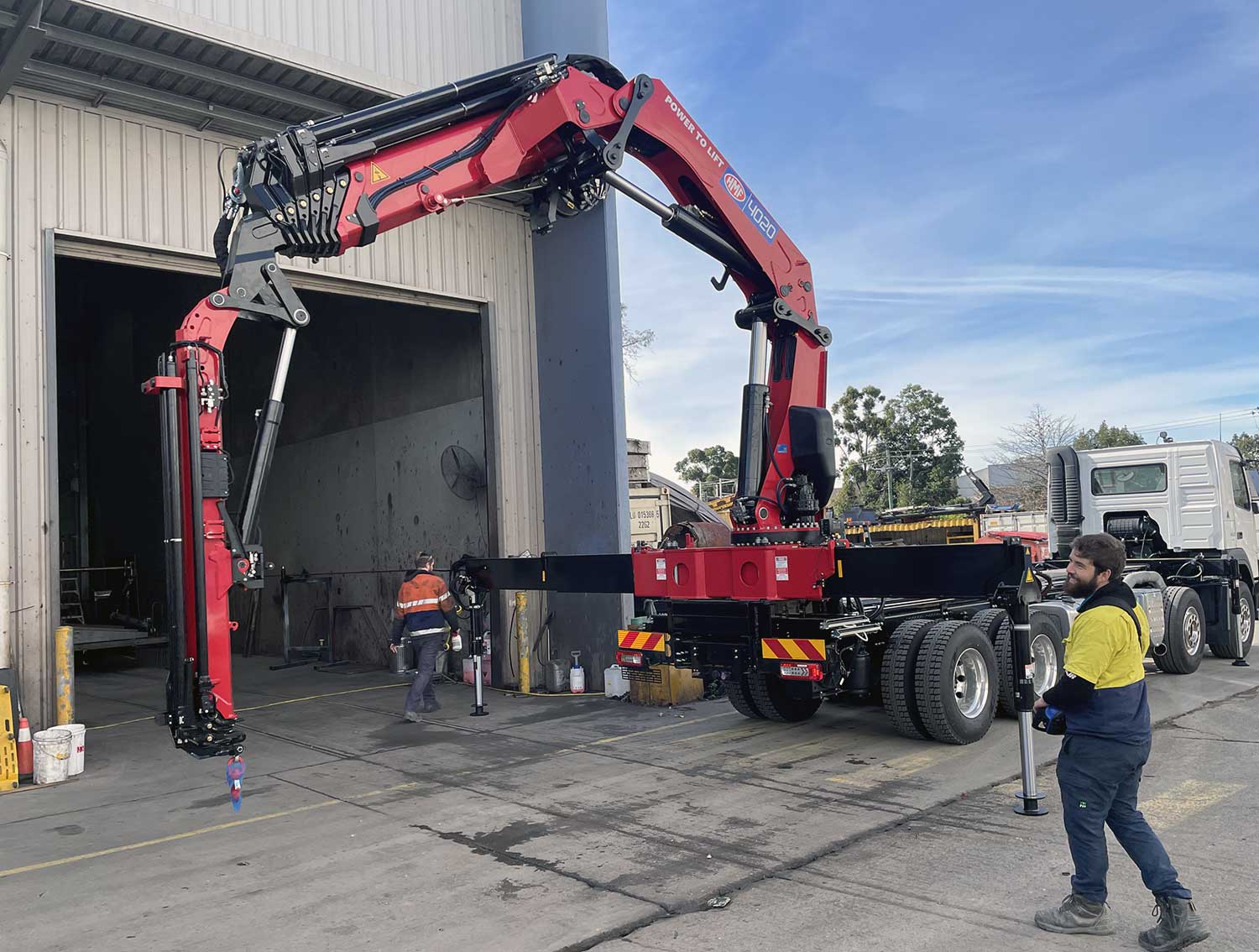
Outriggers sit at the base of the crane, extending outward from the subframe on horizontal beams before a vertical leg or jack lowers to the ground, increasing the support area beyond the truck’s normal wheelbase. A footplate or pad at the base of each leg spreads that point load over a larger ground area.
Outriggers are part of the crane truck rather than an accessory bolted onto the crane, since their performance depends on the subframe, the chassis, and the ground they rest on. A crane with strong lifting figures on paper can still be limited on a job if the setup cannot be deployed as the load chart requires.
Most systems share similar components:
- A stabiliser beam
- A vertical leg or hydraulic jack
- A footplate, often paired with a separate pad underneath
- Hydraulic controls to extend and retract the system
- Extension indicators, confirming how far each leg has deployed
- Locking mechanisms, confirming the outriggers are in an approved position before lifting is permitted
Outriggers Versus Stabilisers
The terms outrigger and stabiliser are used interchangeably across the industry, and manufacturer terminology varies. Even so, Australian safety guidance draws a general distinction. An outrigger typically lifts the vehicle’s wheels clear of the ground, spreading the vehicle’s entire weight across the extended supports, while a stabiliser generally supports the vehicle without lifting the wheels off the ground. That distinction is more important for mobile cranes, where the whole vehicle is often raised before a lift begins.
On many vehicle loading cranes, the system functions closer to a stabiliser, levelling the truck rather than lifting it clear, so operators should follow the instructions supplied for their specific machine.
Why Loader Crane Outriggers Matter
Once extended, the stabilisers increase the area within which the combined centre of gravity of the crane truck, crane, and load must stay. A load held close to the crane column creates a relatively small overturning moment, but moving it further out increases the working radius and its effect on stability.
A wider support base gives the crane truck a greater margin to resist that effect, which is one reason two cranes with similar tonne-metre ratings can behave quite differently once working radius and stabiliser extension come into play.
The load is also not simply carried by the visible footplate. Force travels down through the boom, crane base, subframe and chassis, into the stabiliser system, through the pad, and into the ground. Safe Work Australia advises that a crane’s standing area needs to account for the crane, the load, the lifting attachments, dynamic forces, and bearing pressure applied through outriggers or tyres. Usable capacity on the day depends on boom length, working radius, stabiliser extension, truck loading, and vehicle inclination, which is why two identical cranes can perform differently on different sites.
The load chart, not the nominal tonne-metre rating, is the reference point for what a configuration can lift at a given distance from the column.
How Outrigger Position Affects Crane Capacity
Full extension of the stabilisers generally provides the widest base of support a crane allows, but that requires enough lateral space, which is not always available beside kerbs, traffic lanes or fences, and it does not remove the need to check the ground.
On confined sites, partially extended outriggers can be practical, but only where the crane is specifically approved for that configuration, with the load chart or control system recognising it.
WorkSafe Queensland has identified short-legging, using reduced extension on equipment not designed for it, as a contributor to overturning incidents. Where a crane is not approved for partial deployment, the safer option is a position that allows full extension.
How Electronic Stability Systems Help
Modern loader cranes increasingly pair mechanical outrigger setup with electronic monitoring. HMF’s Electronic Vehicle Stability, or EVS, monitors load on the vehicle and crane, operating speed and vehicle heel, working alongside the Rated Capacity Limiter (RCL) to manage available lifting capacity as stability conditions change, introducing warnings and movement restrictions as the crane approaches its limits.
EVS is not standard across HMF’s range; it is available as an upgrade and becomes a more significant consideration on larger cranes. It does not compensate for unsuitable ground or an incorrect setup, since it manages the crane’s response to the vehicle’s condition rather than the ground itself.
Why Ground Conditions and Outrigger Pads Matter
A surface that looks solid can still conceal problems underneath. Fill covered by a dry crust, backfilled trenches, underground services, voids beneath concrete or asphalt, and saturated soil can all behave differently once an outrigger applies pressure. WorkSafe Queensland has warned that soft ground can sit hidden beneath a dry crust and fail suddenly once loading increases, so a visual check is not the same as confirming bearing capacity.
Outrigger pads increase the contact area beneath the footplate, spreading force over a larger section of ground and reducing pressure at any point, but a pad does not make unsuitable ground safe on its own. Selection depends on the expected load, the material and the verified condition of the site. Safe Work Australia’s guidance is consistent: supports should sit on suitable material, and the ground must be stable and compacted before the crane is loaded.
| Site condition | Potential concern | Appropriate response |
| Firm, level engineered surface | Concentrated point loads | Confirm bearing capacity, use suitable pads |
| Asphalt in hot conditions | Surface deformation under load | Assess underlying structure and pads |
| Grass or soft soil | Sinking or settlement | Verify bearing capacity, increase support area |
| Fill or backfilled trench | Hidden voids or weak layers | Obtain site information or assessment |
| Ground near an excavation | Collapse or subsidence | Confirm positioning and engineering controls |
| Suspended slab | Structural overloading | Obtain structural verification first |
This table is a starting point for identifying when further assessment is needed, not a substitute for engineering advice. Anyone working with suspected fill, underground infrastructure, waterlogged ground, suspended slabs or significant slope should seek competent-person advice before setting up.
Choosing a Loader Crane Outrigger System
First, assess the realistically available space for deployment, including street width, kerbs, fences, building setbacks, and depot access. Documenting the actual loads, including weight, dimensions, reach and attachments such as fly-jibs or grabs, also helps, since these shape what the configuration needs to do on the day.
Stabiliser configuration is worth comparing directly, including extension positions, manual versus hydraulic deployment, extension sensing, and whether the control system supports approved partial deployment.
Truck compatibility is equally important, covering mounting position, subframe engineering, chassis strength, axle loads, and remaining payload once you account for tare weight. Servicing access is easy to overlook at this stage, so check component accessibility and whether genuine parts and local support are available.
Common Outrigger and Stabiliser Mistakes
| Mistake | Potential consequence |
| Assuming the surface is strong enough without checking | Pad settlement, loss of level |
| Using inadequate or poorly positioned support material | Pad slipping, the outrigger foot moving off its support |
| Partially extending a system not approved for it | Operating outside rated configuration, overturning risk |
| Relying only on electronic safety systems | Overlooking ground assessment and correct setup |
| Failing to secure stabilisers before road travel | Damage to primary and secondary locks in transit |
Safe Work Australia is direct in its message about relying on technology alone. Rated capacity limiters and stability systems are additional controls, not substitutes for ground assessment and competent operation. A WorkSafe Queensland campaign assessing more than 1,000 vehicle loading cranes found damaged and missing secondary locks and unsecured stabilisers, so transport safety is also a part of outrigger management.
Loader Crane Outrigger Pre-Use Checklist
This is a general awareness checklist, not a substitute for a formal lift plan or manufacturer instructions.
- The setup follows the manufacturer’s instructions for this crane.
- The ground and supporting structure have been assessed as suitable.
- The crane truck can be positioned level as required.
- Stabiliser beams and legs show no visible damage or hydraulic leakage.
- Footplates and pads are serviceable.
- Locks, pins, sensors and interlocks are functioning correctly.
- The approved deployment configuration has been selected and confirmed.
- The working radius and load fall within the rated capacity for that configuration.
- Underground services and excavations nearby have been considered.
- Supports are monitored for movement or sinking throughout the lift.
- Stabilisers will be fully stowed and secured before road travel.
How HMF Supports Loader Crane Stability
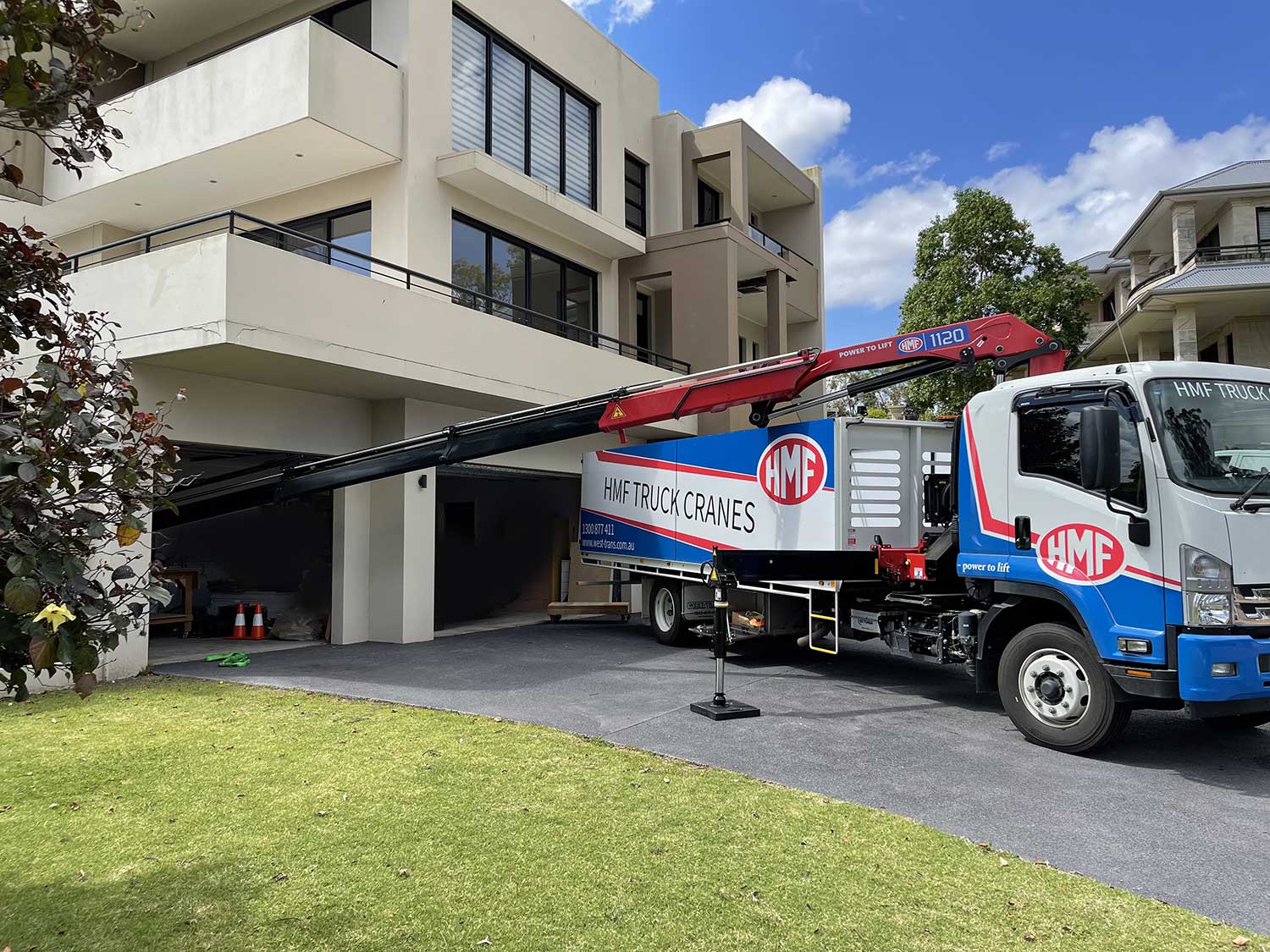
HMF Australia’s range spans small, medium and large vehicle loading cranes, from around 3 to 95 tonne-metres, built around a low tare weight and a lift-to-weight ratio reflecting over 70 years of Danish engineering. Every crane includes a Rated Capacity Limiter, restricting operation to prevent overloading, and Electronic Vehicle Stability is available as an upgrade on applicable models. West-Trans Equipment, HMF’s exclusive Australian distributor, supports sales, installation, and servicing from Mulgrave, NSW, backed by national parts availability.
Outriggers support a crane truck’s operating base, but their effectiveness depends on the complete system, including the crane, the truck, the load, the working radius and the ground underneath. A crane’s usable capacity is not fixed on a spec sheet; it changes with configuration and site conditions. Explore HMF Australia’s vehicle loading crane range, or discuss your loads and site conditions with the team, to find a stabiliser setup suited to how the crane will actually be used.
Frequently Asked Questions
What is the purpose of the outriggers on a loader crane?
They increase the crane truck’s support area and transfer the forces created by the crane and load into the ground, helping the vehicle resist overturning during a lift.
What is the difference between an outrigger and a stabiliser?
Australian guidance generally distinguishes an outrigger, which lifts the wheels off the ground, from a stabiliser, which supports the vehicle without doing so, though the terms are often used interchangeably.
Why are pads placed beneath crane outriggers?
Pads spread force over a larger area, reducing pressure at any one point, but the ground still needs to be assessed as suitable.
Can a loader crane operate on uneven ground?
The truck needs to be set up within the manufacturer’s level and stability requirements, and uneven or soft ground may need preparation first.
How do stability systems know where the outriggers are positioned?
Applicable cranes may use extension and inclination sensors feeding into a control system, though not every crane includes the same technology.