
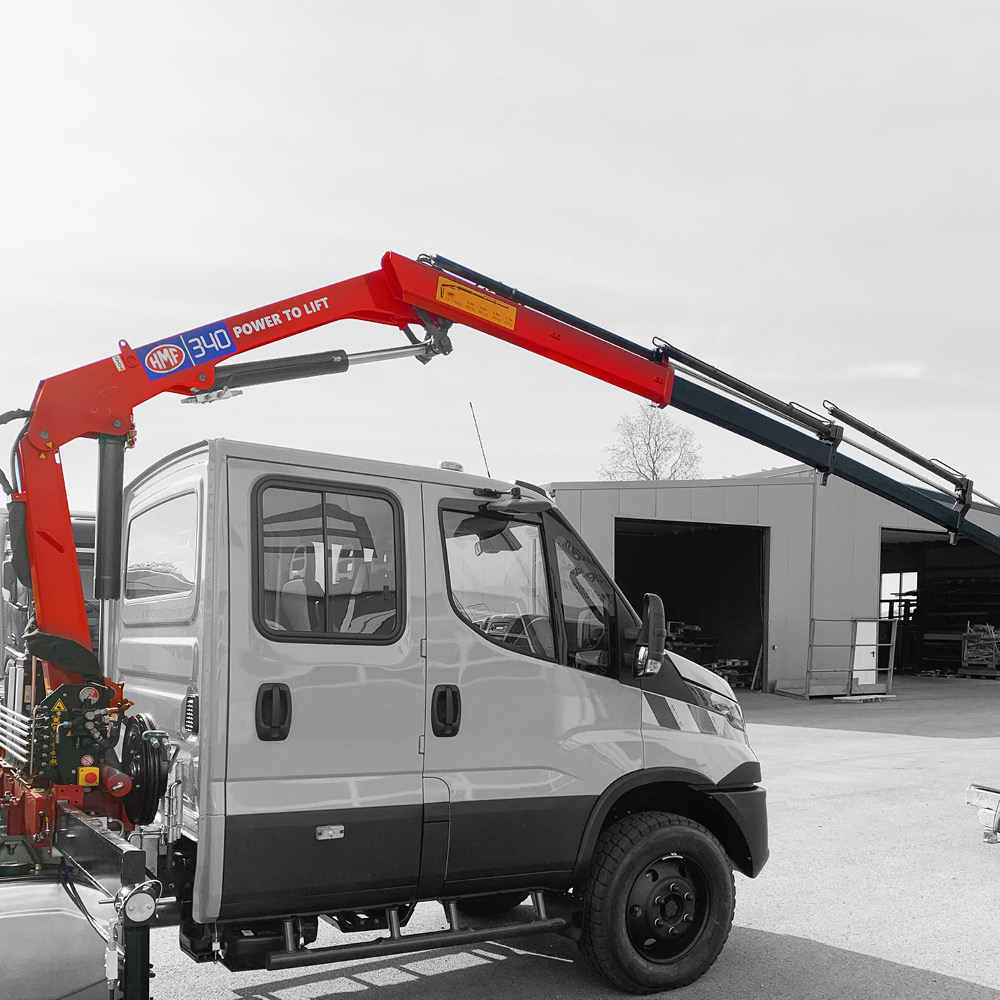
Most vehicle-loading crane installations rely on an engineered subframe or mounting arrangement that transfers crane loads to the truck chassis. During lifting, the mounting arrangement helps transfer and distribute crane forces through the vehicle structure, reducing concentrated stress on individual chassis points.
When it’s compromised, nothing above it works the way it should. The consequences can include crane movement under load, failed inspections, compliance issues, and vehicle downtime until the problem is properly assessed and repaired. For fleet managers and transport businesses running crane trucks on construction sites or across logistics and resources operations, subframe integrity isn’t a maintenance detail. It’s the foundation that holds compliance, safety, and uptime together.
What Is a Vehicle Loading Crane Subframe?
The subframe is the structural interface between the crane and the truck chassis. Often fabricated from C-channel sections, high-tensile steel or other engineered structural components, it sits on the chassis rails and helps distribute concentrated loads from crane operation across a wider area of the frame. Without it, mounting points would bear directly onto the chassis, creating stress concentrations the frame was never designed to absorb. The subframe also adds tare weight to the vehicle, so its construction materials and design must balance structural adequacy with payload considerations. For rear-mounted cranes, particularly larger models, the subframe also plays a critical role in torsional rigidity. A well-engineered subframe limits chassis twist during lifts, helping maintain stability across the entire crane truck setup. Without adequate torsional stiffness at the mounting arrangement, the chassis can flex under asymmetric or dynamic loads, compromising the stability of the crane and the safety of the lift.
A critical detail in crane design is the subframe’s leading edge. VSB6 Section J1 (Body Mounting) specifies that this edge must be tapered, frog-mouthed, or undercut rather than cut vertically. A vertical cut-off acts like a knife edge on the chassis, initiating cracks over time. Suitable spacers, packers or runners may also be used between the subframe and chassis to distribute load and reduce point stress, depending on manufacturer and VSB6 requirements.
Why Subframe Integrity Carries Major Risk
Every time a vehicle loading crane lifts, slews, or extends its boom, the subframe absorbs those dynamic forces before they reach the chassis. Rear-mounted and side-lift configurations place higher torsional and asymmetric loads through the chassis, especially when the truck is not set up on level, stable ground. For larger rear-mounted cranes in particular, a correctly engineered subframe is what limits chassis twist under these conditions. Without it, torsional forces that would otherwise rack the frame have nowhere to go. Side lifts on uneven ground, common on construction sites and high-risk worksites, can increase the load path through the frame and place additional stress on the subframe and mounting arrangement.
What most crane operators don’t account for is that subframes rarely fail from a single overload event. Many modern vehicle loading cranes include load indicators, rated capacity limiters, or electronic safety systems. These reduce overload risk, but they do not remove the need for correct setup, operator judgement, and inspection.
The real issue is cumulative fatigue. Thousands of load cycles within rated limits gradually concentrate stress at weld joints and bolt holes, and over time, that stress produces cracks. Those cracks can close under static conditions, completely invisible during a visual check, and only open again under the dynamic forces of an active lift. This is exactly why non-destructive testing is part of the formal inspection process.
Australian Compliance Requirements
Who Carries the Liability?
Any vehicle loading crane installation on a heavy vehicle must be assessed and certified under the relevant NHVR modification framework. The installer and certifier are responsible for ensuring the crane and truck combination is assessed, mounted and certified correctly, while the owner or operator retains WHS responsibilities for maintaining and operating the crane safely.
Each installation should be assessed for the specific crane, truck chassis and mounting arrangement. The same crane mounted on different trucks can produce different stress profiles, so there is no generic approach.
Structural Requirements Under VSB6
Vehicle loading crane installations on heavy vehicles are assessed under VSB6, the National Code of Practice for Heavy Vehicle Modifications. For crane installations, Section R1 applies to vehicle-mounted lifting systems, while Section J1 covers body mounting and how the subframe or mounting structure is attached to the vehicle chassis.
For vehicle loading cranes rated between 1 and 150 tonne-metres, the installation must be engineered and certified to suit the specific crane, truck chassis and mounting arrangement. This includes checking chassis strength, point-load locations such as crane mounts, torsional loads from slewing, stabiliser loads, and how those forces are transferred through the subframe.
In practical terms, this means the subframe cannot be treated as a generic bolt-on component. The mounting arrangement needs to be assessed by a qualified person or Approved Vehicle Examiner, with structural calculations used to confirm that the installation meets the relevant VSB6 requirements before the vehicle is certified for road use.
Safety Provisions for the Completed Installation
Completed vehicle loading crane installations must include appropriate safety provisions for the crane and vehicle combination. This can include clearly marked controls, emergency stop devices, load indicators, stabiliser safety systems, operating instructions and other safety measures required by the crane manufacturer, VSB6 assessment and relevant Australian Standards. Regular inspection, maintenance and repairs should be completed in line with the manufacturer’s instructions or by a competent person, with inspections completed at least annually.
Australian Standards and Operator Requirements
Two key standards guide the use, design and inspection of vehicle loading cranes in Australia. AS 1418.11:2014 covers vehicle-loading crane design and construction, while AS 2550.11:2016 covers the safe use of vehicle-loading cranes.
Operators must also be trained and competent for the crane and lifting task being performed. For vehicle loading cranes with a capacity of 10 metre tonnes or more, the operator must hold the appropriate High Risk Work Licence for vehicle loading cranes. Safe Work Australia lists this licence class as covering the use of a vehicle loading crane with a capacity of 10 metre tonnes or more, including load estimation and slinging techniques.
Warning Signs of Subframe Damage
Cracks at weld points and around bolt holes are the most obvious sign of subframe distress, but they’re not always easy to spot. Subframes sit beneath the tray, often out of sight, and corrosion at the contact surfaces between subframe and chassis can go unnoticed for years, especially on vehicles operating in coastal, mining, or tropical environments where salt, dust, and moisture accelerate the damage.
What catches most operators off guard is the damage you can’t see during a walkaround. Fatigue cracks can close completely when the crane isn’t under load, making the subframe look perfectly sound during a static check. It’s only when the crane is operating that those cracks reopen.
If you’re noticing chassis flex during lifts, the crane drifting when holding a load, or unusual vibration when the boom moves laterally, those are signs that the subframe or its mounting arrangement may be compromised. At that point, a visual inspection isn’t enough, and the vehicle needs a proper assessment.
Consequences Beyond the Repair Invoice
Subframe failure creates risk across safety, compliance, and commercial dimensions. It can result in crane displacement, load drops endangering nearby persons, potential collisions with site plant or structures, and vehicle instability. A compromised subframe may mean the vehicle no longer complies with the condition under which it was certified, and it may need repair, reassessment and reinspection before returning to service.
WHS liability and potential prosecution apply if an incident occurs on a non-compliant installation. Insurance may not cover incidents where the installation was non-compliant, exposing the transport business to the full cost. Known structural deficiencies that go unaddressed can lead to fines, voided warranties, and lost coverage.
How and When Integrity Is Assessed
Annual inspections must be completed at least annually and should be carried out in accordance with the manufacturer’s instructions or by a competent person. A 10-year major inspection typically goes deeper than an annual inspection and may include non-destructive testing, proof-load testing, and structural assessment of the crane and mounting arrangement, including the subframe.
A major inspection is generally required at 10 years, with further major inspections at intervals set by AS 2550.11, manufacturer requirements, condition and usage. These inspections can become costly depending on the crane’s age, condition and required repairs, which is why some operators choose to replace older units rather than continue maintaining them.
Between formal inspections, operators should conduct pre-start visual checks and record any abnormal loads or exposure to rough road conditions. Missing service history doesn’t disqualify a crane, but does require more thorough assessment.
Best Practices for Protecting Subframe Integrity
The single most effective thing you can do for subframe longevity is get the installation right from the start. A certified installer will design the subframe for the specific truck and crane combination, ensuring load is distributed across the chassis without creating stress concentrations.
Once that foundation is in place, operating within rated limits is the next priority, keeping in mind that those limits assume ideal conditions. Adverse road conditions, sloped ground, and side-loading all reduce the effective safe capacity of the installation.
Beyond operation, the environment the vehicle works in should dictate how often the subframe gets attention. Vehicles operating in coastal, mining, or tropical conditions are exposed to accelerated corrosion and should be inspected more frequently than the minimum annual requirement. Maintaining complete service records matters too, both for compliance and because those records become critical if the vehicle is ever involved in an incident or changes hands. A small repair to a cracked weld or corroded hardware early on is always going to cost less than a failure that takes the vehicle off the road entirely.
HMF Australia: Subframe and Crane Installation
HMF Australia supplies and installs vehicle-loading cranes from its workshop in Mulgrave, NSW. As a one-stop shop for subframe, crane fitout and tray installation, every build is managed through an accredited installation process. Each subframe is engineered for the exact chassis and crane combination, whether small, medium or large, helping distribute crane loads correctly while supporting payload and operational requirements. HMF’s crane range includes small loading cranes from 3 to 9 tonne metre, medium loading cranes from 10 to 28 tonne metre, and large loading cranes from 32 to 95 tonne metre.
View the HMF crane range or get in touch to discuss your application.
Frequently Asked Questions
What structural requirements apply to crane subframes in Australia?
Vehicle loading crane installations are assessed under VSB6, with engineering calculations used to confirm the truck, crane, chassis and mounting arrangement meet the required strength and safety requirements.
How often does a vehicle loading crane subframe need to be inspected?
Vehicle loading cranes should be inspected at least annually, with major inspections required in line with AS 2550.11, manufacturer requirements, crane age, condition and usage.
Can I install a crane subframe myself?
No. A modification plate issued by an Approved Vehicle Examiner (AVE) is legally required, and the work must be carried out by qualified tradespeople.
What happens if my crane fails an AVE inspection?
The vehicle should not be returned to service with the crane until the defects are rectified and the installation has been reassessed or reinspected as required.
What is a 10-year inspection for a vehicle loading crane?
A major structural and functional assessment under AS 1418.11 and AS 2550.11, involving non-destructive testing, proof-load testing, and engineering analysis of the crane, hoists, safety systems, and mounting arrangement.
Does HMF Australia supply and install subframes?
Yes, as part of their complete crane installation service from Mulgrave, NSW.